Experience of Soldiers: The Battle of the Somme
Double-Sided A4 Report • ~500 words • Print and paste into workbook
Instructions (click to expand)
- Keep to ~500 words for this battle.
- Include: dates, location + map, forces & casualties, fighting & weapons, aims & objectives, description of events, results & significance.
- Add a primary source quote showing soldier experiences and a secondary source explaining significance.
- Optional: add a relevant YouTube link.
Map gallery, upload recommended maps
Recommended filenames: somme-campaign-map.png, somme.phase-july.png, somme-phase-sept.png, trench-cross-section.png, somme-craters-topo.png, somme-troop-disposition.png

mapSomme)
mapPhaseJuly)
trenchCross)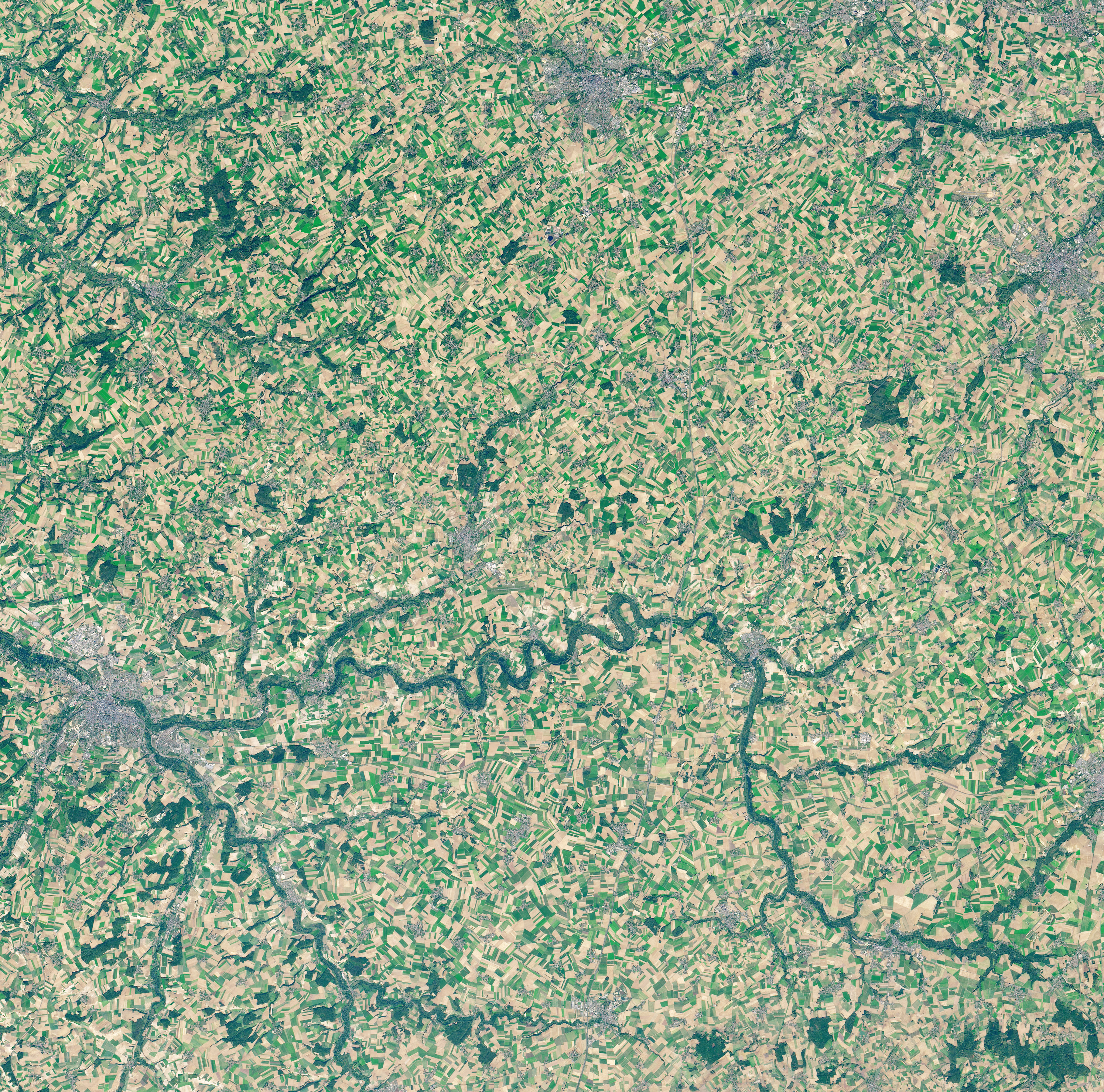
craterMap)
troopMap)Tip: use large campaign maps for mapSomme, and cropped insets for phase maps. Diagrams are better as PNG now.
The Battle of the Somme (1 July – 18 November 1916)
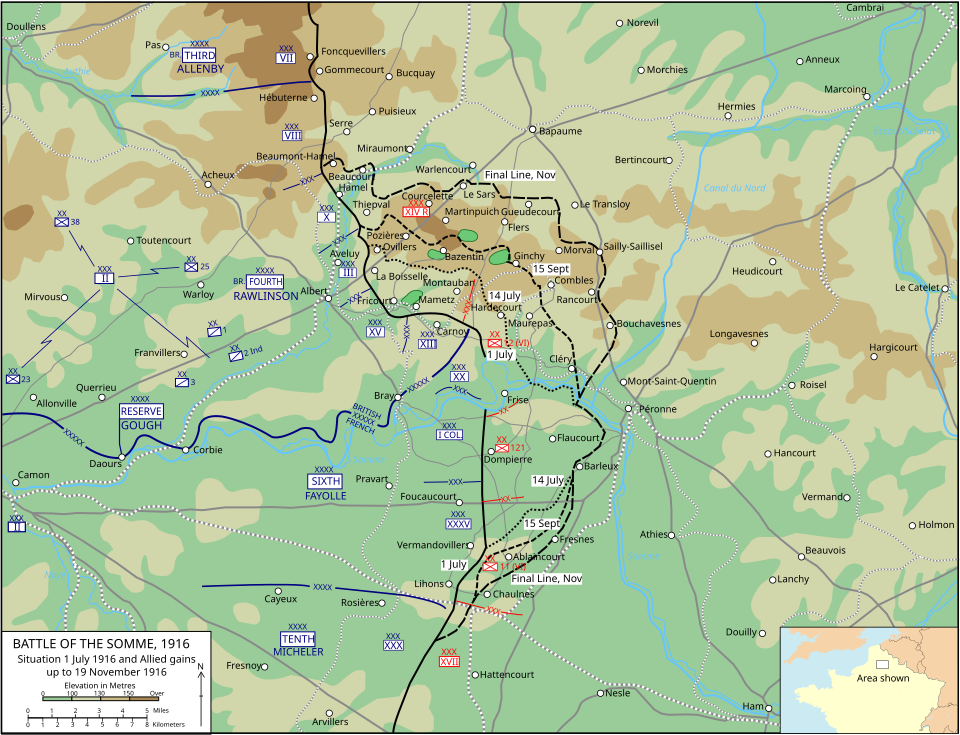
Dates & Location
Somme River sector, northern France. Add and label a map.
Forces & Casualties
Summarise numbers engaged and casualties (British, French, German). Use a reliable secondary source and cite below.
| Category | Estimated number |
|---|---|
| Allied troops engaged (total, July–Nov) | Over 1,000,000 (cumulative across months) |
| German troops engaged (approx.) | Several hundred thousand (cumulative) |
| Allied casualties (killed/wounded/missing) | ~620,000 (British ~419,000; French ~204,000, estimates vary) |
| German casualties (killed/wounded/missing) | ~500,000–600,000 (estimates vary) |
| First day (1 July 1916), British casualties | ~57,470 (around 19,240 killed) |
| Combined approximate total casualties | Over 1,000,000 (both sides, killed + wounded) |
Notes on numbers
Figures differ by historian and archive. For classroom use cite IWM, AWM or official national statistics; state clearly if figures are 'estimates' and whether 'missing' are included.
Fighting & Weapons
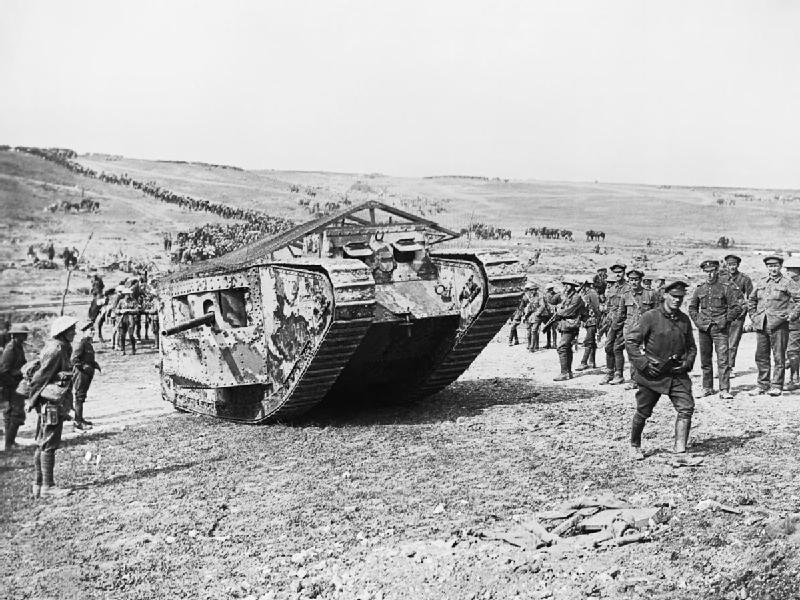
Trench warfare, week-long preliminary bombardments, machine-gun defence, creeping barrages; tanks introduced at Flers-Courcelette (15 September 1916).
| Weapon / System | Role in Battle | Use / Example |
|---|---|---|
| Heavy artillery & howitzers | Preparatory bombardments, counter-battery, destruction of wire and trenches | Week-long bombardment before 1 July; continuous shelling throughout campaign |
| Machine guns (Vickers, MG08) | Defensive firepower that inflicted mass casualties on attacking infantry | Responsible for much of the 1 July losses where wire remained intact |
| Rifles, bayonets, grenades | Close combat and trench clearing | Used in assaults and trench-raids |
| Trench mortars & mines (tunnelling) | Local destruction of strongpoints; create cratered landscape | Hawthorn Ridge mine (example); crater fields impeded movement |
| Aircraft (biplanes) | Reconnaissance and artillery spotting | Vital for adjusting barrage fire; limited ground attack |
| Tanks (Mark I) | Break wire, cross shell-cratered ground and support infantry | First used at Flers–Courcelette (15 Sept 1916), limited numbers/mechanical issues |
| Specialist weapons (flamethrowers, Livens projectors) | Clearing dugouts and barrages of gas/smoke shells | Used in limited attacks and trench-clearing operations |
weaponsSomme)Aims & Objectives
Strategic objective (Allies): To remove the pressure of the French at Verdun, by obliging the Germans to withdraw troops from the Verdun sector and to inflict attritional casualties.
British operational plans: To make a break in the German systems of defense, to take the key points - Péronne and Bapaume - and use the breach to penetrate into German-occupied territories. Greater good: Tip the balance on the Western Front by combining artillery, infantry and (eventually) armor and air support.
Teacher checkpoint
Link these aims to the Results & Significance section when writing your conclusion: did the action relieve Verdun? Did it achieve breakthrough? What was the cost?
Description of Events (editable)
The offensive began after a prolonged artillery barrage. On 1 July British infantry advanced across no-man's land expecting German defenses neutralised. In many sectors wire and strongpoints remained, so machine guns and artillery devastated the attackers. Over the following months fighting settled into grinding assaults and local counter-attacks; the introduction of tanks in September signalled a technological shift but mechanical problems limited their immediate impact. By mid-November operations ceased with only limited territorial gains.
Chronology & Key Phases
| Date / Period | Key events & short description |
|---|---|
| Late June 1916 | Allied week-long preparatory artillery bombardment across the Somme sector to destroy wire and batteries. |
| 1 July 1916 | Opening assault, British and Dominion forces advance after bombardment; catastrophic British casualties in many sectors (worst day in British military history). |
| July – August 1916 | Local attacks and heavy fighting at Pozieres, Mouquet Farm, and the Somme salient; Australian and Dominion troops see severe losses. |
| 15–22 Sept 1916 | Flers–Courcelette, first operational use of British tanks; limited breakthrough in places and capture of new ground (e.g., parts of Flers, Courcelette). |
| Sept – Oct 1916 | Battles of Thiepval, Morval and Le Transloy; attritional fighting continues amid cratered and muddy terrain. |
| Nov 1916 | Operations wind down amid worsening weather; offensive ends on 18 November with only modest territorial gains. |
Results & Significance
Assess whether aims were met; discuss territorial changes, casualties, morale, and the battle’s legacy in Allied and German narratives. Consider: limited tactical gains vs significant attrition of German manpower; tanks introduced but not decisive; cultural memory and the Somme as symbol of industrialised slaughter.
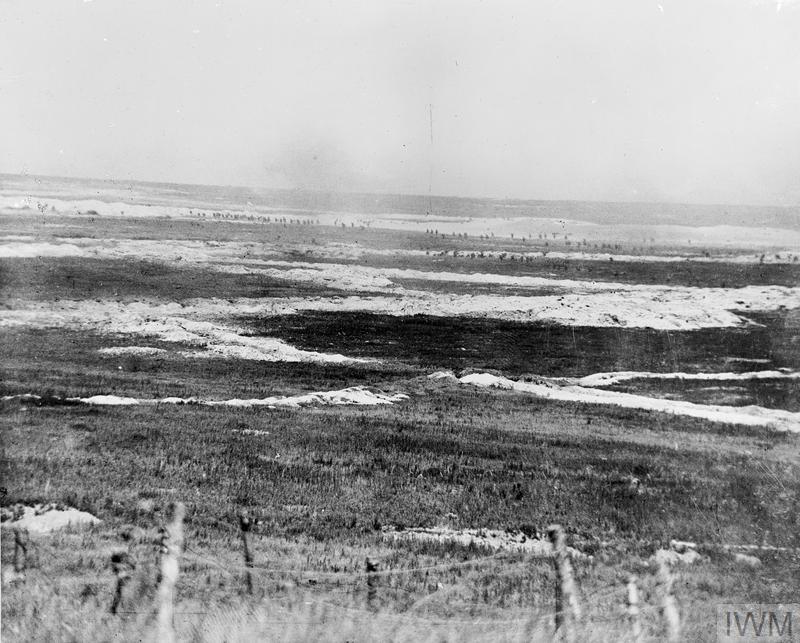
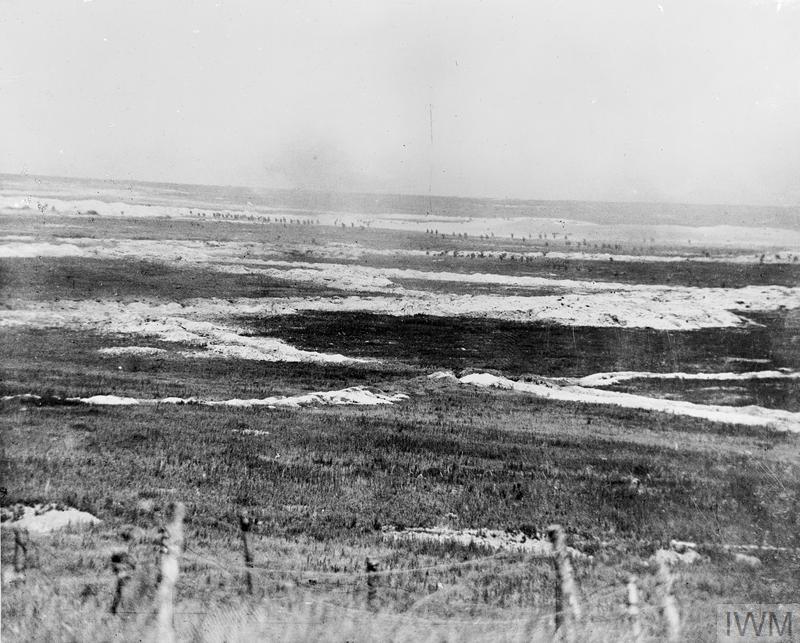
quote1Img“And there wasn’t one of us in our battalion that ever got to the German lines. You couldn’t! It was absolutely impossible…”
Explanation: This quote highlights the impossibility many soldiers faced in reaching German lines and can be used to explain the tactical and physical barriers posed by wire, shell‑craters and defensive fire.
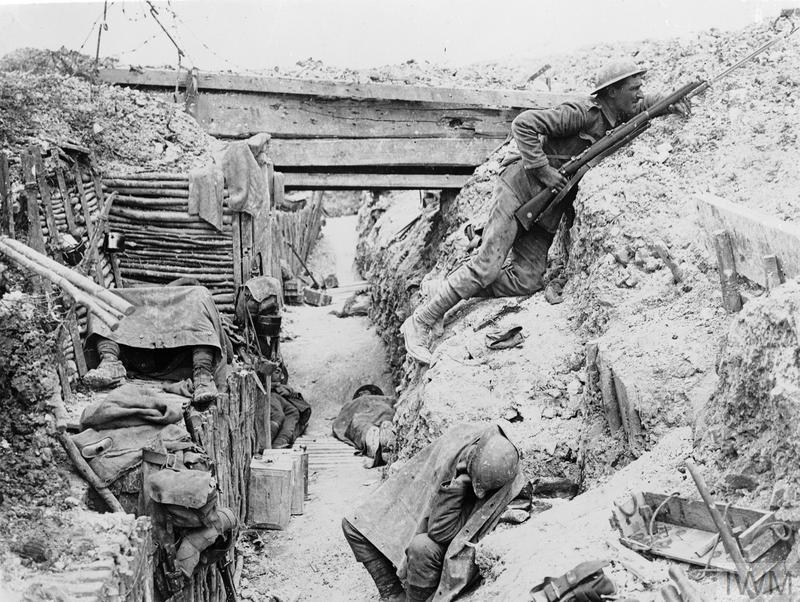
quote2Img“It was what I always called the dance of hell.”
Explanation: This short phrase summarises the chaos and horror seen by participants, useful for analysing metaphor and language in primary accounts and how veterans recalled the Somme.
quote3Img“The men dropped down in rows.”
Explanation: A stark, visual description emphasising mass casualties and the immediate physical outcome of attacking across exposed ground, useful as evidence of the human cost.
Where to find originals (click to open)
Secondary Sources (historians)
- Imperial War Museums: interpretive overview (use for classroom summary).
- Gary Sheffield, William Philpott, Robin Prior, modern academic analyses (quotes and pages can be inserted for assessment).
- National Army Museum, weapons & tactical context.
References & Source List
These are pre-filled; add more as needed. The list auto-sorts A→Z on load.
Primary
- Barwick, A. A. (1914–1918). War Diaries. Canberra: Australian War Memorial. Available at: AWM.
- Selected battalion war diaries (Somme, 1916). UK National Archives, digitised copies and catalog entries.
Secondary
- Imperial War Museums. “What Was the Battle of the Somme?” Available at: iwm.org.uk.
- National Army Museum. “Weapons of the Western Front.” Available at: nam.ac.uk.
- FirstWorldWar.com – “Battles (Index)”. Available at: firstworldwar.com.
Print tip: set printer to A4, choose Save as PDF to create the two-page printable report.